Harvest Festival Workshops

The annual Harvest Festival in Lillooet year had a new event this year: mini workshops hosted by LAFS, in partnership with the Investment Agriculture Foundation.

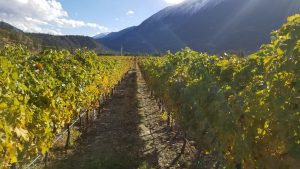
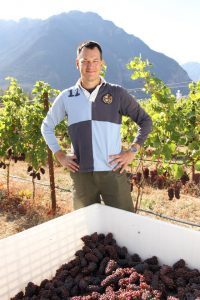
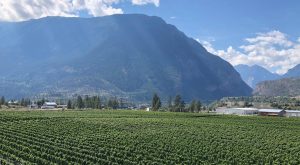
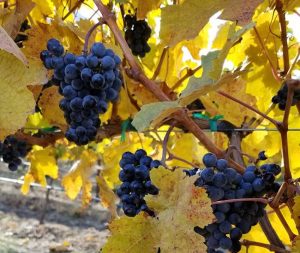
Rolf DeBruin, Jean-Sebastien Ouellette, Sam Quinlan and Lesley Provost all put on interesting and informative workshops.  These included a presentation on basic viticulture by Rolf, which covered the basics of planting a vineyard, what to worry about, and what one might get to enjoy growing grapes!

For example, beautiful vineyards views:
  

(Photos courtesy of Fort Berens Estate Winery)

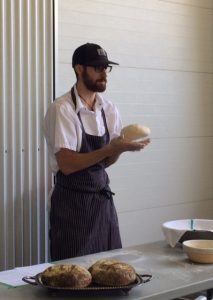
Jean-Sebastien gave a hands-on demonstration of sourdough making – the same bread he bakes daily for Fort Berens Kitchen.

Photo Credit: Vivian Birch-Jones

He taught the group how to make sourdough starter, how to take care of it, and how to get the best crust.  Everyone got to try some bread baked that morning, and could opt in for an email with all the details for trying it at home.

Lesley Provost, Fort Berens’ Sommelier, gave a talk on food and wine pairing with Jean-Sebastien, and participants were able to sample a white and a red from the winery’s collection.  The discussion covered which types of wine pair well with food, and questions from the crowd at the end got everyone talking about what amazing local food we have in Lillooet, as well as about Noma, a world-class restaurant that is on the frontier of local food innovation!

Photo Credit: Vivian Birch-Jones

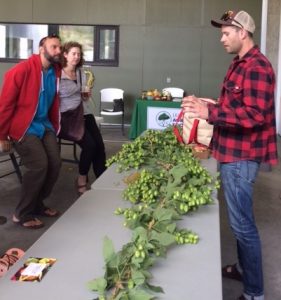
Last up in our presentation lineup was Sam Quinlan of Harvesters of Organic Hops, who brought in a big vine of hops, as well as his processed versions for everyone to take a look at, touch and smell.  Sam’s passion for growing hops was evident from the moment he arrived, and it seemed that the group couldn’t help but crowd right up to the table to listen and learn with Sam as he discussed many aspects of hop growing, harvesting and processing.

We were extremely grateful to have the support of the Investment Agriculture Foundation, through the Province of British Columbia, in order to be able to put on these workshops.  We hope that we will be able to run more workshops at the festival in the future.

In the meantime, keep an eye out for our Bee Keeping Workshop coming up in October!

Rose Hill Featured on SLRD’s Video “Love This Place, Reduce Your Waste”

“A casual reading of daily newspapers makes clear that waste management, and in particular landfilling, is high on the political agenda of many municipalities, and is recognized as a leading environmental problem.” – Heeney, 2003

If you haven’t seen it – go and check out the SLRD’s video about what the Lillooet Landfill is doing to help our community improve their recycling and waste habits.  It’s got some beautiful footage of Lillooet, and discusses a very timely topic – our waste and how to make less of it.

Around the world, people are waking up to the fact that we haven’t taken into account the true cost of our waste.  What can we do about it?  Well, as Sue Senger of Rose Hill Farm says in the video, the ultimate goal is zero waste. How we go about getting there, is by getting better at managing what we throw away.  The wise alliteration, “Reduce, Re-Use, Recycle” is being put into effect here at our landfill site.  Rick Hjerpe has created recycling facilities for almost all of the items we routinely discard, and a free store for the ones that could be re-used by someone else.  Tour the landfill site with Rick for an impressive list of recyclable items – including oils, paint and all kinds of electronics.  It’s good to know that so much of what could go in to our landfill can be recycled, keeping it out of our soil and extending the use of our valuable resources.

The video also takes viewers on a tour of Rose Hill Farm with Sue, where she explains why she farms, what she’s farming, and how she is reducing her own waste. Sue also speaks to invasive plants in the area – an all too common problem in British Columbia.  It’s important not to compost invasive species, as it simply compounds the problem!  (For more information about how to spot invasives, and what you can do to prevent and eliminate them, check out the Lillooet Regional Invasive Species Society website here.)

With climate change upon us, and an ever-growing global community, every little bit that each of us can do to protect our land, our water and our environment helps insure a healthier future for those to come.

“Anything else you’re interested in is not going to happen if you can’t breathe the air and drink the water. Don’t sit this one out. Do something. You are by accident of fate alive at an absolutely critical moment in the history of our planet.” – Carl Sagan    

New Director – Rolf deBruin

What do you know about what LAFS is doing? I am aware of a few things: initiatives around a slaughterhouse, educational workshops, the brand development of Lillooet Grown foods.

What made you want to join the LAFS Board of Directors?
I was part of the working group that created the Agricultural Plan.  I was on the Agriculture Advisory Committee for the SLRD in 2011.  I am excited about the fact that there is lots of opportunity for agriculture here, we have one of the best growing seasons in Canada for all kinds of crops.  I’d like to see that get more attention. The food security goal is fantastic, and I’d say that was my trigger to join the board: I want to see more focus on the underutilized ALR.

What do you plan to bring to the LAFS board?
I hope to come to a number of initiatives to encourage and assist in the development of more added-value acreages.  I would love to see more grapes!  But as a LAFS board member, I’m not solely focusing on that.  Part of the issue here is the huge lot sizes, we need to work with the ALR to create more reasonable farm sizes.  There is much higher productivity with smaller parcel sizes.

What part of LAFS mission are you most passionate about?
Land and farmers.  There is lots of talk of small scale agriculture demanding a premium, and we can’t realise that if we only have huge pieces of land for people to try and use.  For example, Chris Billion produces amazing carrots.  We need more Chris Billions.  So we need to work with the ALR to encourage smaller lots for better access and availability of land.

Future ideas?  Vision for agriculture?
We need to put Lillooet on the map! We need to brand to be able to sell our produce and be recognized as an agricultural region.  This will help bring in new farmers.  We’ve been working on that as a winery – the branding, and now Lillooet is a VQA. Ten years down the road, I’d like to be able to say that we helped found that, and bring more growers and vineyards to the area.

Farmer Focus: Immian Wolfe and Green Dirt Farm

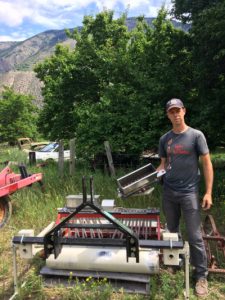
Immian Wolfe, one of the founding members of LAFS, runs the Organic and Veganic Green Dirt Farm in Texas Creek.  He and his family of five moved back to Lillooet from Aldergrove 5 years ago to farm.  Green Dirt is focusing on growing salad mixes and garlic this year, and have plans to expand to other crops when they have fine-tuned the systems they have in place.  I went out to Texas Creek to do a short interview with him last week.
Can you tell us a bit about yourself and your family?
“Can you answer that one?” Here’s what I can tell you:  Immian was working for Silver Hills as VP Plant Operations, when he decided to move back to Lillooet, where he grew up.  He says a big part of moving back was because the people are friendly here, and he missed his family and the area.  Immian and his lovely wife Kymbreelee have four children: Arycia, Riella, Isaiah and Ellie.  They moved from the coast with plans to enjoy a more relaxed, outdoor, farming lifestyle, and raise their children in the country.

Can you tell us a about your farming practices?
Veganic growing practices mean that Green Dirt does not use any kind of animal inputs in the growing process.  One of the biggest challenges is weeds.  Stale bedding allows for planting with very minimal weeds.  This technique involves targeting weed seeds in the shallow layer of the soil. They are allowed germinate, and then killed by raking through the soil with a shallow cultivator just prior to planting the crop. During the sixteen-week long season, we are planting twice a week to keep up with the demand.  It is possible that we may have to switch to 4 or 5 plantings a week for tighter management of leaf size but for now, two is making the cut!

When did you get involved with LAFS and why?
Right away – I was on the Area B Agricultural Committee.  When the Agricultural Plan was completed, the SLRD was looking for an organization to implement the Ag Plan and LAFS was created.

Where are your products sold?
Green Dirt Farms salad mixes currently come in Baby Spinach, Baby Arugula, Power Salad Mix, Baby Kale, Lettuce and Spring Mix. They are available in Nature’s Fare, Choices, Spud/Urban Fare, Quality Foods, Buy Low, Nester’s, and the Country Store, and select independent retailers.

What are your plans for the future?
My vision for the future is all about seeing the farm provide for our little family so we can continue to love and work in this amazing area. Over the next couple of years, I intend to get all of the acres we have leased and available into production. Right now the farm is actively using 14 acres of the 24.

As I leave, Immian laughs, “Most people work 9-5, farmers work 5-9, and sometimes a little bit more. With the seasonal nature of only being able to grow things for half the year, you have to work hard during that time.”
New Director – Stefan Zeidler

What do I know about what LAFS has been doing?
LAFS has accomplished a great deal in the short time since it grew out of the efforts of the SLRD’s Agricultural Area Committee. Already it has identified and received grant funding from a number of sources and used it to deliver workshops providing useful instruction for both farmers and non-farmers. As well, LAFS has begun developing a “face” for the Lillooet agricultural area, and started to implement projects such as the nutritional coupon program and the abattoir feasibility study that will help not only the farmers in our area but its residents as well.
 
What made me want to join the board? 
Over a decade of spending time in the Lillooet area and now 6 years of living here full time I’ve come to love the Lillooet area and the people who have chosen to call it home. I worked at Fort Berens a few years ago and only recently identified that the most enjoyable part of that work for me was the sense that I was helping the community by sharing my passion for it from behind the tasting bar or at events, and hopefully helping to spur further interest in the area that would bring more tourists in due time. It’s out of this that I have started trying to find new ways of engaging with the community and seeing what I can do to help with addressing the challenges that face it. My decision to join the board was also helped by the personal tie of our family farm down Texas Creek Road that is steadily making its way towards becoming a vineyard and winery.

What do I plan to bring to the LAFS Board? 
A notepad and attentive ear! Though I’m beginning to grasp some of the challenges facing farmers in the area and nationwide, I have a lot to learn about the full scope of these issues and the variety of solutions that are arising to address them. Fortunately, it doesn’t require the economics degree I have to understand concepts like the importance of economies of scale in agriculture, but I hope that I will be able to use the ability to frame problems that I developed while undertaking my degree to help contribute to clarity in the board’s discussions and thought processes.

What part of the LAFS mission am I most passionate about? 
As much as buzzwords are not my favourite, the part of LAFS I’m most excited about is the development and implementation of the “agri-tourism” strategy plan. Based on what I’ve come to understand of BC’s wine industry, the more that can be done to bring people into the region and face-to-face with those who are growing and preparing their agricultural products, the better. When people come to see the Lillooet region and its beauty, and have an opportunity to interact with the wonderful people who make it up, they’ll be left with stories that they’ll then take home and share with those they love (or simply post on instagram, haha). These types of visitors won’t just be marketing for us either, they’ll also be contributing to the local economy more broadly over the course of their stays; ensuring not just the viability of the agricultural sector in Lillooet, but also to the viability of Lillooet itself.
To be perfectly clear, I don’t want to see Lillooet become the next Okanagan. Heaven forbid. However, it’s important to try to bring more people into the region in order to realize the positive economic benefits that such visits could bring for Lillooet’s businesses. I’m excited not only to see how LAFS will help generate such visits, but also to see the role it might play in trying to manage them into the future.

Future Thoughts
There’s so much opportunity for growth! Moving into the future I see LAFS continuing to eliminate barriers to entry for new farmers by providing, perhaps, equipment sharing initiatives and centralized infrastructure for processing and storing of agricultural products. In particular, the stories of ice caves at the foot of our local talus slopes has led me to wonder whether it might be possible to construct such facilities on a larger scale. It’s unrealistic to consider projects like these at this stage of LAFS’s development, but we shouldn’t let our dreams be constrained to too great an extent by reality!

New Executive Director Position Filled

Hello LAFS Subscribers! My name is Sarah Petznick, and I have been hired to work for the Lillooet Agriculture and Food Society as their new Executive Director.  I will be taking over from Vivian Birch-Jones and Marianne Gagnon in the coming months, and look forward to meeting those of you whom I haven’t yet! I moved to Lillooet this March, from the coast where I was working most recently for Emergency Management British Columbia.  I have spent the last six years there, five of them studying Sustainable Agriculture at UBC in Vancouver.  My degree is a Bachelor of Science in Global Resource Systems which falls under what is now the Faculty of Land and Food Systems (and used to be the Faculty of Agricultural Sciences/Faculty of Agriculture). I grew up on a farm in the Shuswap, where my Mum bred and raised Welsh Cobs.  We did our own hay, and always had neighbours with fresh eggs and veggies for us. I am very excited to be a part of the LAFS community, and to be working towards a vision of a strong agricultural future for the Lillooet region.  I do think that Guaranteed Rugged or not, we’re definitely BC’s little nugget.  😉  

Survey Results Are In!

In January 2018, LAFS surveyed the Lillooet Community to get feedback on the Grow Forward Workshops that were held in 2017, and to get suggestions for future workshops. The survey was filled out by 41 people. Below are the results of the survey. Picture1 Picture2 Picture3 Picture4  
 Comments:
“Great work. But at my stage of life, it’s mostly for fun that I would attend.”
“BC Food systems Network gathering here? Fruit Gleaning project of LFM taken over by someone else with funding for coordinator?”
“Give more time to notify participants of workshops.”
“Making a plant/seed trade would be awesome.”
“I thought that the venue for the pruning workshop at Bridge River was excellent. There was lots of parking available and it was easy to find.”
“Keep it going!”
“I don’t attend as I don’t handle group situations well, so it isn’t lack of interest that keeps me from attending. Your efforts to provide this critical information are appreciated!”
“Thank you for all that your group does for the Lillooet community.”
“Good job with organizing workshops and keeping people informed.”
“Beekeeping!”
“Looking forward to the learning!”
“Great initiative and thanks to the LAFS Society”
“You’re awesome!”

Buy-Low Foods Can Help Farmers

Getting produce and products into stores can be a challenge for small-scale farmers. Lillooet Buy-Low Foods might be able to help! Store Manager Bob Sheridan says Buy-Low is not only capable of offering a lending hand, but happy to do so, and hoping more farmers will take advantage of the opportunity. Buy-Low Foods can distribute locally grown produce to other affiliated stores. If you bring one crate of tomatoes, it’s likely Buy-Low will be able to sell the tomatoes right here in the Lillooet store, but if you bring dozens of crates, than they can be sent out to stores in the Lower Mainland. Prices are determined using a pricing system that allows Buy Low to see what other farmers in BC are getting for comparable produce. Amlec Garlic In the recent past, Amlec Organic packaged garlic they’d purchased from two local farmers into mesh bags containing three heads each. Lillooet Buy-Low Foods then bought the packaged garlic from Amlec. This is an example of growers coming together to collectively market their produce. Sheridan said the product was popular and encourages others to follow suit. Proper packaging is a key part to taking advantage of this opportunity. “Produce needs to be packed into clean boxes of consistent dimensions”, Sheridan said. Small-scale farmers often use recycled boxes of mismatched dimensions and this makes it harder to distribute their produce. If you have any more questions about working with Buy-Low Foods to get your produce into stores, Bob Sheridan is happy to help. Photo Credit: Matthew Davidson from Amlec Organics

Seedy Saturday? Super Successful!

Seedy Saturday - Seed Lending Library

Seed Lending Library

Seedy Saturday was a big success again this year. 112 people came to the event and about 25 stayed for the Tiny Talks in the afternoon. During the first half of the day, seed vendors, a seed library, and information booths vied for the attention of the growing crowd of attendees. There was also an art corner for kids, a café that sold delicious food made from local ingredients, and a winnower set up outside to clean people’s seeds. During the second half of the day, four short presentations were given by local gardeners and farmers. The first presentation, titled “Reclaiming Soil with Hugelkultur”, was given my Denise O’Laney. She explained the benefits of a no-till approach to gardening and showed a power-point presentation which detailed the steps involved in creating a hugelkultur garden bed.
Seedy Saturday - Raffle Table.jpg

Christine Mahaits volunteering at the Raffle Table.

The second presentation was titled “Soil Health” and was given by Trevor Chandler. He spoke about the delicate ecosystem that is our soil and how to best protect and manage it. The third presentation, given by Mojave Kaplan, was titled “Integrating Seed Saving Into Your Garden”. Her power-point presentation guided us through the process of selecting fruits and vegetables from which to collect seeds. Finally, Matthew Davidson gave us a presentation titled “Amlec Food Security Project”. He told us about how the project was started, its many challenges and successes and its current situation. After each presentation, 15 minutes were allowed for questions, and in each case, we easily filled that time. The participants were eager to learn and excited by the topics.
20180224_093630.jpg

LAFS’ table featured products from local farmers.

Photo Credit: Mischa Chandler

Farmer Focus: Gillian Smith

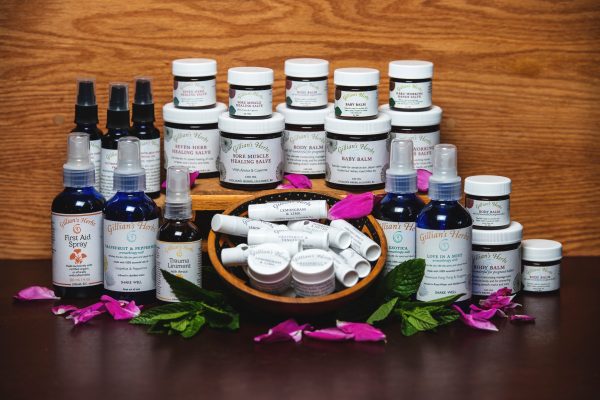
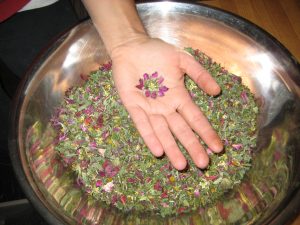
Gillian Smith operates Gillian’s Herbs from her home in the Yalakom. The business sells a variety of herbal products made by hand by Gillian, who has been studying herbalism since 1994. She grows most of the herbs for the products on her homestead, and also locally wildcrafts many of the herbs herself. In the short interview below, you will learn more about her practices, philosophy and how to get your hands on her amazing products. Enjoy! Q: Can you tell us a bit about yourself and your family? A: I am a plant and animal loving multi-tasker by nature and, though as a child was convinced I’d be a veterinarian when I grew up, I started my love of herbs eating wintergreen and pine needles from my rural backyard outside of North Bay, Ontario at the young age of 3.  In high school, my girlfriend and I dabbled in herbal medicine, making love potions, teas and visiting herb shops in Toronto.  In university, it became clear that botany was more to my liking as an academic focus and so veterinary medicine was shelved, and that led me to start a Master’s degree at the University of Victoria. There I became quite disillusioned with academics in general and, quite by chance, found a beginner’s herb class to lighten my spirit. It was there that my love of herbs and herbal medicine really germinated and I haven’t looked back once. I’ve been taught by some of the greatest herbalists on the planet, traveling as far as Albuquerque to study, returning to BC to sell my wares. I started with a simple salve of Sage and Comfrey which morphed into the now famous Seven Herb Healing Salve. 26 years later, my family of 3 homesteads a piece of paradise in the Yalakom Valley where we grow a wide variety of medicinal and culinary herbs, as well as food crops next to our owner built straw bale home. Q: What is your business and what do you grow for it? A: Gillian’s Herbs is almost exclusively a one woman run business that produces small batch, high quality herbal products ranging from medicinal tinctures, tea blends, skin care products, aromatherapy products and herbal condiments for the dining table.  I grow the vast majority of the herbs for the products and, at last count, my plant list was at 44 species.  I also wildcraft many herbs from around the area and delight in the knowledge that if my timing is off for harvesting a plant at one elevation, there’s a good chance that it’s available just “up the road” at a higher elevation!  I am deeply grateful for the gift that plants provide, and am humbled in the knowledge that the ancestors of this land and lands throughout the earth are watching and lending their wisdom as I harvest. Q: Can you tell us about your farming practices? A: We only use organic growing practices married with a sprinkling of permaculture methods.  I received a certificate in Permaculture Design right here in Lillooet under the tutelage of Alice Kidd.  When wildcrafting, I am strict in using ecological and ethical values when choosing where, when and how much to harvest – away from roads, power lines, train tracks to avoid dust and pollution; only harvest a maximum of 40% of the plants in a given area to leave behind enough for wildlife, pollinators, genetic material; harvest at the right time to get the best quality medicine as well as for when it’s right for that species, and so on. Q: What is the best way to purchase your products? A: Currently, my website provides a good catalogue of my products and contacting me directly is the best way to purchase my products.  Creative Haven on Main Street in Lillooet also carries many of my products.  I’d love to see a permanent Farmer’s Market storefront in town set up soon!  I’m game to “man” the shop if the opportunity ever comes!